Karhutla in Palangka Raya: Volunteers Battle Peatland Fires Until Dawn
This English translation is a draft and is still under review.
It was late at night when reports of karhutla (forest and land fires) were once again received in the city of Palangka Raya, Central Kalimantan. While most residents were resting, volunteers were still struggling to put out fires at two separate locations until the early hours of Sunday.
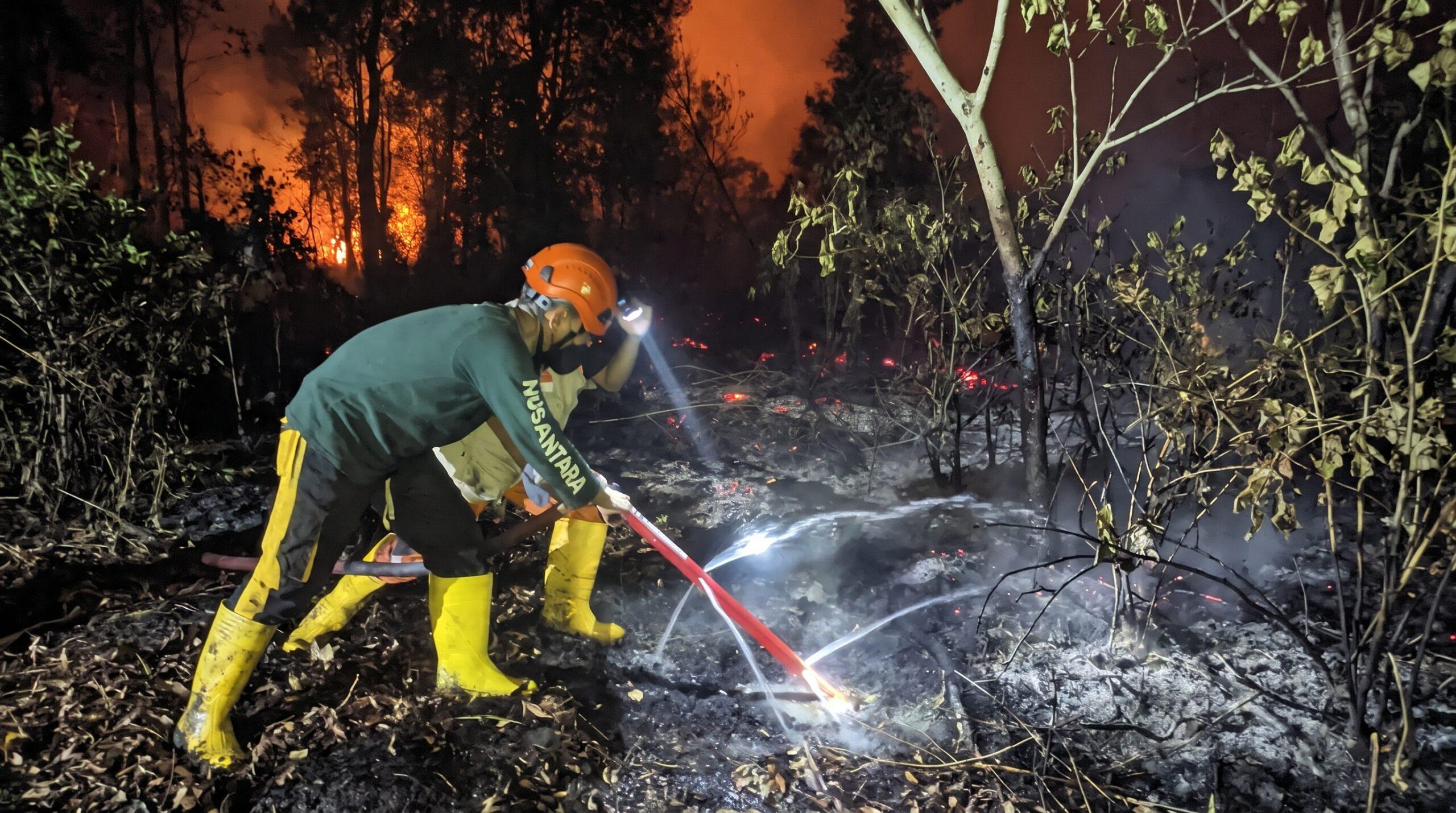
On Saturday night, at around 10:00 p.m. WIB (Western Indonesia Time), the Relawan Nusantara team headed to Jalan Trans Kalimantan in Kelampangan Subdistrict. In that area, around 50 households (KK) live near the site of the fire. A few hours later, at around 2:00 a.m. WIB, a report of a fire on Jalan Kalibata set the team in motion again to continue the firefighting effort.
The Challenge of Fighting Fire Beneath the Peatland Surface

For this response, Relawan Nusantara deployed four medical team personnel and five volunteer firefighters, bringing an alkon (portable water pump) and supporting equipment. However, putting out a fire on burning land cannot always be done simply by dousing the surface.
On peatland, fire can spread and persist below the ground surface, making hotspots difficult to reach. This condition means the firefighting process has to be carried out repeatedly, with extra effort.
One of the tools used was a piercing nozzle, which helps reach hotspots below the ground surface. Volunteers have to drive the tool into the ground, pull it back out, and then repeat the same process at the next spot. Limited access to water added to the challenges during the response.
Pierce, pull, then repeat. The motion was carried out over and over amid harsh field conditions, as time went on toward morning.
Firefighters' Physical Condition Becomes a Key Concern

The response effort lasted for hours. The volunteers only returned after the dawn prayer time, having struggled to handle the fires at the two locations.
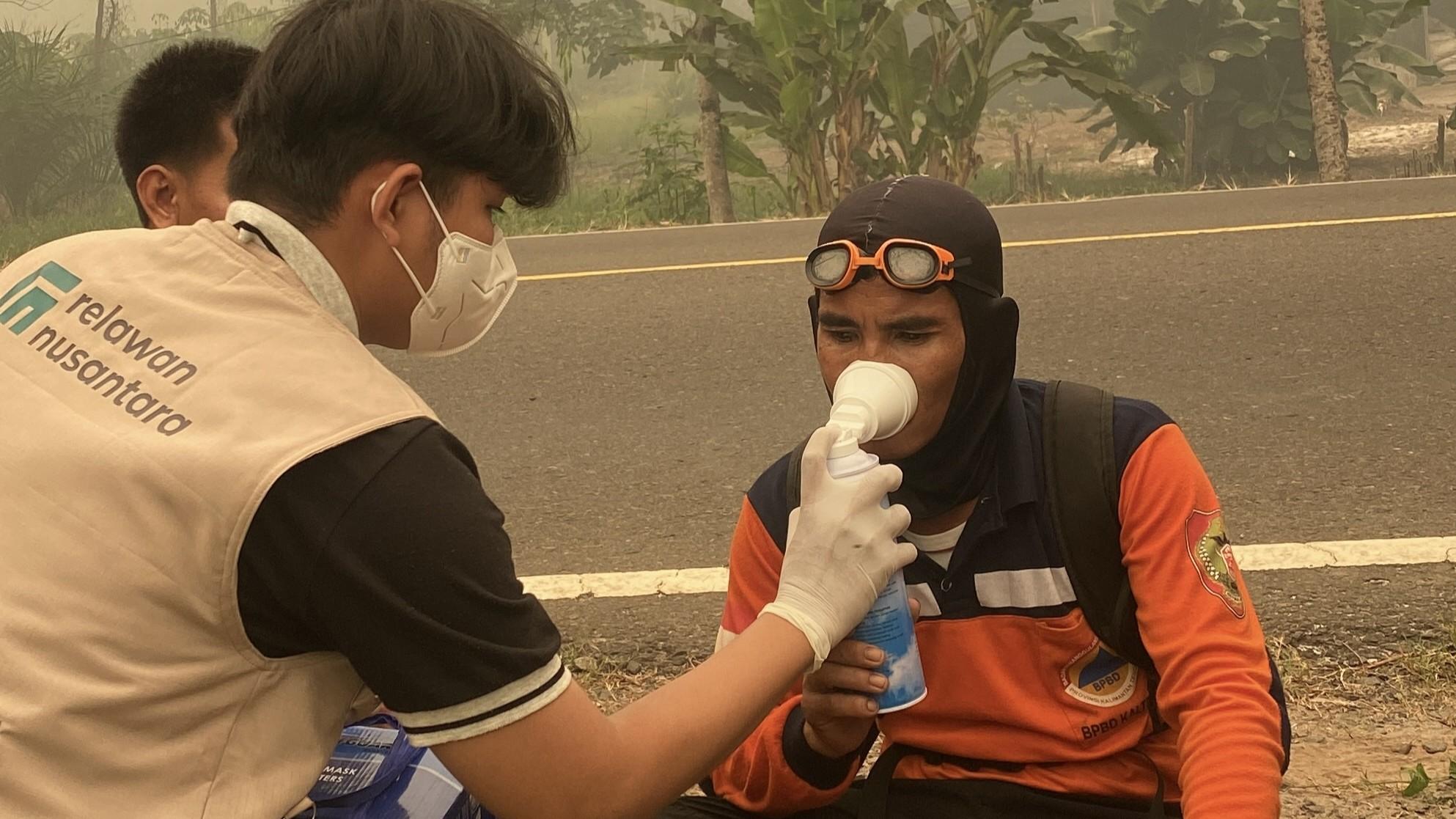
In the midst of that long duty, the physical condition of the personnel also became a concern. Several MDMC volunteers appeared to be suffering from exhaustion, and some were even vomiting. This situation shows that responding to karhutla not only confronts personnel with fire and smoke, but also with a heavy physical burden over many hours.
Naufal Fajrul Haqqi of Relawan Nusantara said that the firefighting process requires energy, patience, and team coordination, especially when the hotspots are below the ground surface and access to water is limited.
“The struggle in the field was quite tough. We had to use the piercing nozzle again and again to reach the hotspots below the ground surface. Pierce, pull, then repeat at the next spot. On top of that, with limited access to water, the firefighting process takes no small amount of energy and time. We keep doing our utmost, but the condition and safety of the volunteers must also remain a priority,” said Naufal.
Responding to karhutla requires adequate equipment, access to water, and coordination between teams. At the same time, the health of the personnel needs continuous attention, especially when firefighting goes on into the early hours.
Relawan Nusantara continues working to help with the karhutla response in Palangka Raya. Behind every firefighting effort lies the long work of volunteers to prevent the fire from spreading and to reduce the risk to communities around the fire sites. Let us keep supporting the communities and volunteers in the midst of the karhutla.
Luaskan ManfaatBe Part of Humanitarian Action
Every contribution you make brings hope, protects the vulnerable, and helps affected communities get back on their feet.
Donate Now