Haze from Karhutla (Forest and Land Fires): What Should You Do When Air Quality Worsens?
This English translation is a draft and is still under review.
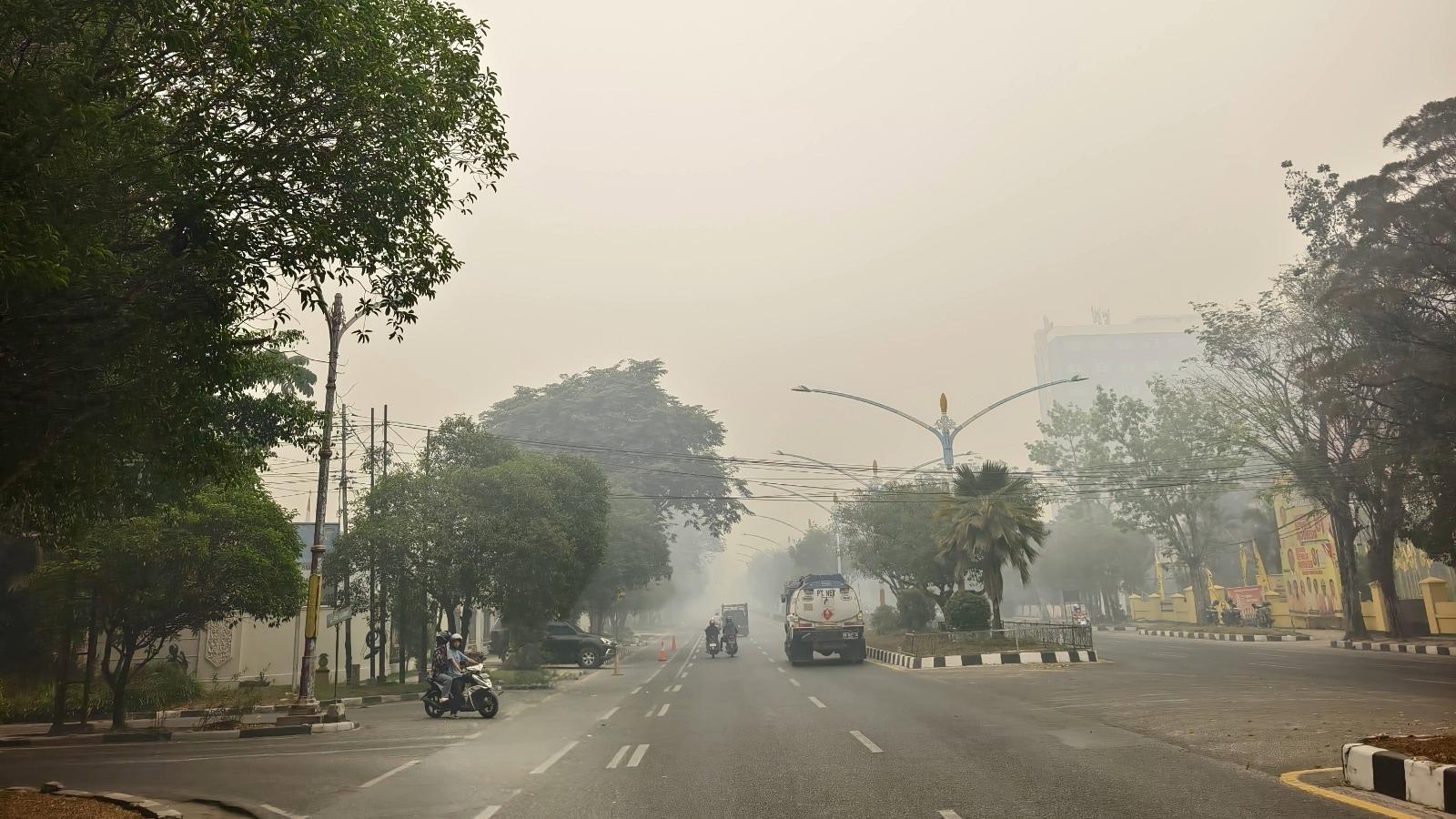
When forest and land fires (known in Indonesia as karhutla) occur, their impact does not stop at the burned area. Smoke can be carried by the wind and bring down air quality in surrounding areas as well.
In conditions like these, daily life still has to go on. Children need to study, parents have to work, and some people still need to travel. However, when the air worsens, there are a few simple steps that can be taken to reduce exposure to smoke.
Why Should We Be Wary of Haze?
Smoke from karhutla contains a mixture of toxic gases and very small fine particles (PM2.5). These fine particles can travel deep into the respiratory tract when inhaled.
Exposure to smoke can cause complaints such as stinging eyes, an irritated throat, coughing, or shortness of breath. People with heart or lung disease, children, the elderly, and pregnant women are among the groups that need extra attention when air quality worsens.
For that reason, when the haze starts to thicken, shielding the body from exposure is an important part of protecting your health.
1. Monitor Air Quality Conditions
Before heading outdoors, make a habit of checking air quality information from official sources such as the ISPU (Air Pollutant Standard Index) portal of the Ministry of Environment and Forestry (Kementerian LHK) or an air monitoring app.
Do not just look at whether the sky appears clear or smoky. Air quality can change throughout the day and cannot always be judged by sight alone.
If air quality is at an unhealthy level, consider reducing outdoor activities, especially strenuous physical activity.
2. Reduce Outdoor Activities
When the smoke thickens, spending a long time outdoors can increase the amount of smoke inhaled.
If there is no urgent need, outdoor activities should be reduced. For those who still have to work or travel, try to choose times and routes that allow for lower smoke exposure.
Children should also avoid physical activity outdoors when air quality is poor.
3. Use the Right Mask
Masks can help reduce exposure to airborne particles, but not all types of masks provide the same protection against smoke.
Respirator masks such as N95, KN95, or those with equivalent particle filtration capability can help filter fine particles when worn correctly and sealed tightly over the nose and mouth.
Masks that are loose or do not cover the face properly do not provide the same protection.
4. Maintain Air Quality Inside the Home
When outdoor air quality worsens, the home can be a place to reduce smoke exposure.
Close doors and windows when the smoke outside is thick. If you use air conditioning or a ventilation system, use settings that help reduce the intake of polluted outdoor air.
Also avoid adding sources of pollution inside the home, such as burning trash, smoking, or other activities that produce smoke.
If available, an air purifier with a HEPA filter can help reduce particles indoors.
5. Pay Attention to Children and Vulnerable Groups
Children, the elderly, pregnant women, and people with heart disease or respiratory problems need extra attention when haze occurs.
They should reduce outdoor activities and stay in places with better air quality.
For children, outdoor play can be temporarily replaced with indoor activities when air quality is not suitable.
6. Recognize the Signs of Health Problems
Exposure to smoke can cause a range of complaints. Some of them are:
- stinging or watery eyes;
- an irritated nose and throat;
- coughing;
- headache;
- heavy or labored breathing;
- tiring easily.
If severe complaints arise, especially difficulty breathing or a worsening health condition, do not wait too long to seek medical help.
When the Smoke Comes, Looking After One Another Matters
Karhutla may start at a single point, but its impact can be felt by many people.
When air quality worsens, looking after yourself also means looking after the people around you. Reminding family members to cut back on outdoor activities, making sure children stay in a safer environment, or helping neighbors in need can all be simple forms of care.
For those who still have to be active outdoors, support can also come in many forms.
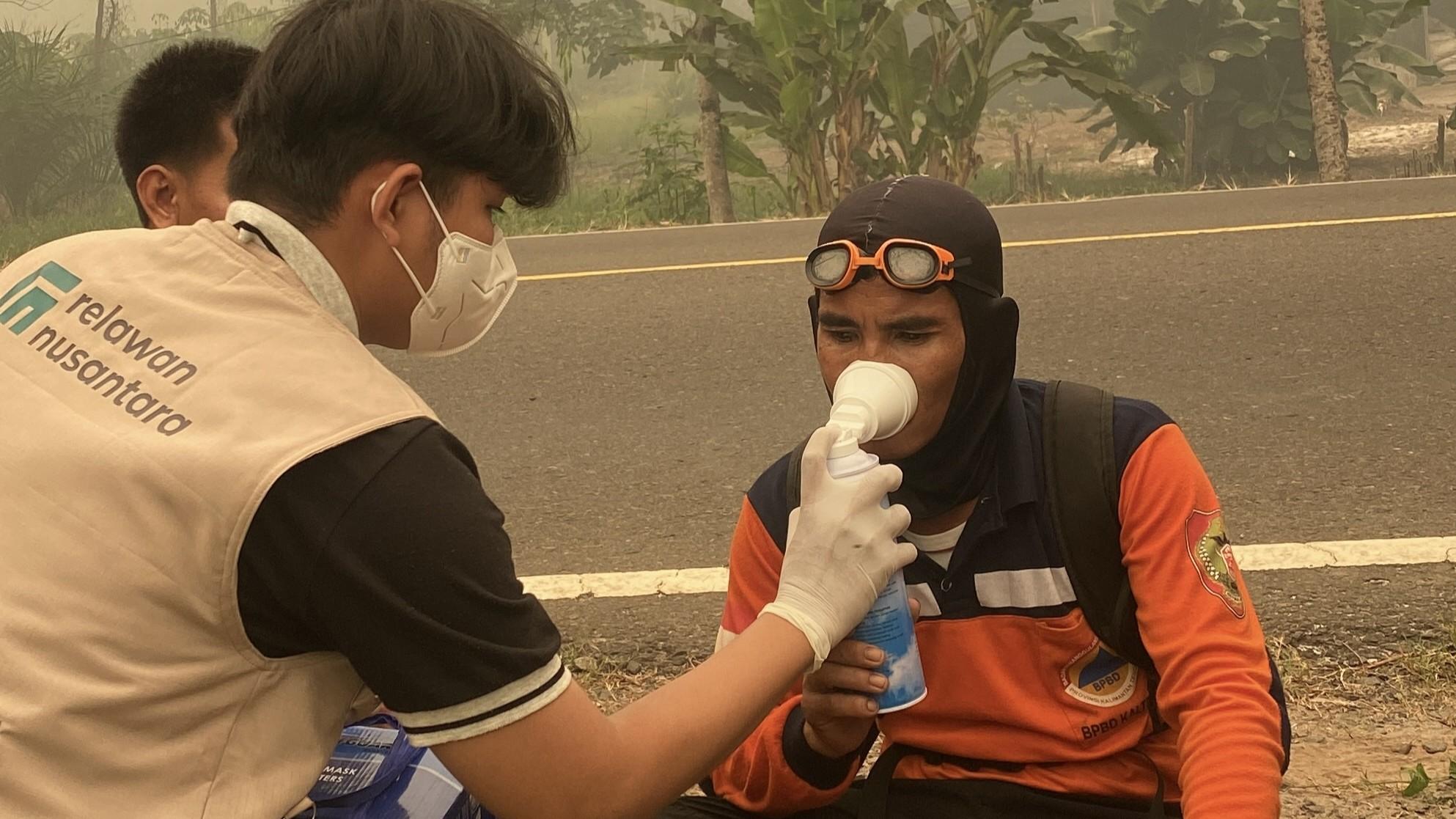
Amid the karhutla in Palangka Raya, for example, Relawan Nusantara set up Pos Segar (refreshment posts) and mobile health services for people who continue to work out in the field.
Because in a disaster, not everyone can stop and take shelter. Some still have to keep moving. And they need support so they can get through the day more safely.
Stay Alert, Keep Looking After One Another
Haze is not only about reduced visibility or a sky that has changed color. Behind it are people who have to adapt to unusual air conditions.
Knowing the air conditions, reducing exposure, using the right protection, and paying attention to more vulnerable groups are simple steps we can take together.
Because when the air turns unkind, looking after yourself is the first step. Looking after one another is the next. Let us help communities and volunteers amid the karhutla in Kalimantan.
Luaskan ManfaatBe Part of Humanitarian Action
Every contribution you make brings hope, protects the vulnerable, and helps affected communities get back on their feet.
Donate Now